Table of Contents
ToggleSharing a bedroom as an adult isn’t the norm, but circumstances, whether financial, caregiver relationships, or intentional minimalism, mean more adults are doing it. Unlike a child’s shared room, an adult twin bedroom demands a design that respects both occupants’ need for personal space, privacy, and a cohesive aesthetic. The trick is balancing two personalities and routines within four walls without making either person feel cramped. This guide walks you through practical layout strategies, color choices, storage solutions, and finishing touches that turn a tight twin setup into a functional, genuinely appealing shared space.
Key Takeaways
- Twin bedroom ideas for adults succeed when you prioritize smart furniture placement, such as parallel or L-shaped layouts that maximize the typical 100–120 square feet while maintaining at least 2–3 feet of walking space between beds and walls.
- A unified color palette with one base neutral, one or two accent colors, and muted hues (sage green, soft blue, warm taupe) makes a shared adult bedroom feel intentional rather than cramped.
- Vertical storage solutions—floating shelves, under-bed bins, wall-mounted pegboards, and narrow wardrobes—eliminate clutter and give each occupant dedicated personal space without consuming floor area.
- Layered lighting with ambient, task, and accent fixtures transforms a small bedroom into an inviting retreat; wall-mounted sconces and reading lights save nightstand space while enabling both occupants to read independently.
- Allow each person 2–3 personal touches, such as framed photos or a small shelf with favorite books, so the twin bedroom feels cohesive overall but reveals individuality up close without appearing cluttered.
Maximize Space With Smart Layout And Furniture Placement
The first step is measuring your room carefully, get actual dimensions, including ceiling height, window placement, and electrical outlets. Most twin bedrooms clock in at roughly 100–120 square feet, so every inch counts. Start by sketching your layout to scale on graph paper or use a free digital tool: moving pencil marks beats moving actual furniture.
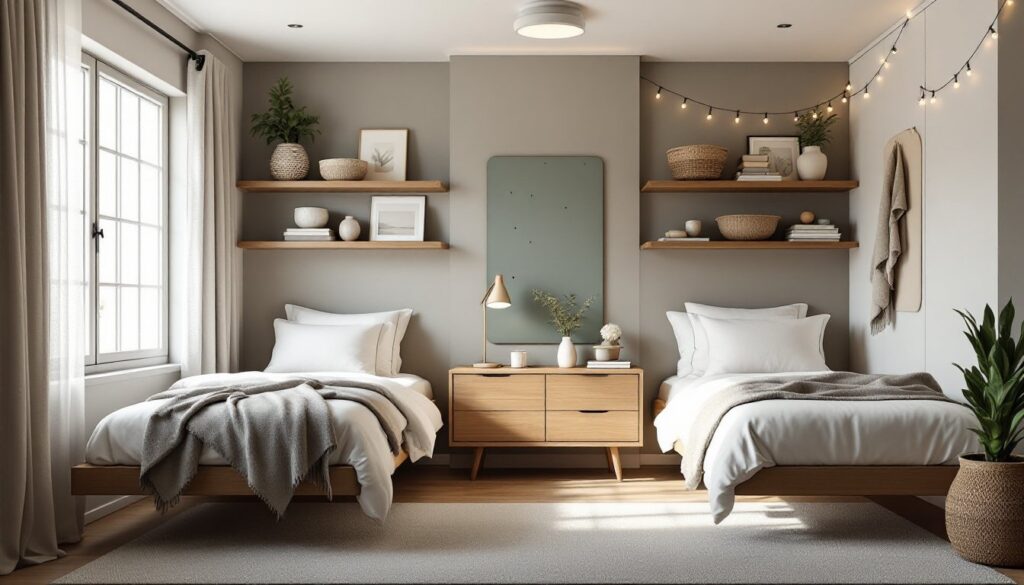
Position the twin beds to avoid blocking natural light or doorways. Parallel placement (both beds along the same wall) works in narrow rooms and makes the space feel less cluttered. If the room is wider, consider an L-shaped layout with beds on adjacent walls, this creates subtle visual separation without dividing the room physically. Ensure at least 2–3 feet of walking space between the bed and adjacent wall: cramped circulation makes a small room feel suffocating.
Keep nightstands modest. A single shared nightstand between the beds saves space, or mount wall-hung shelves (roughly 12 inches wide, 10 inches deep) at approximately 24–30 inches above each mattress. This eliminates floor footprint while keeping essentials within arm’s reach. If floor space allows, use a low dresser or chest at the foot of one bed as a visual anchor without blocking sightlines.
Don’t forget functional zones. Designate one corner or wall section for work or relaxation, a narrow desk (30–36 inches wide), a small reading nook with a chair, or a wall-mounted shelf unit. This gives each person a psychological “own space” even when the room is shared. Avoid center-of-room furniture that divides the space awkwardly.
Choose A Cohesive Color Palette And Design Theme
Color sets the tone immediately. A unified palette makes a small, shared room feel intentional rather than fragmented. Choose one base color (usually neutral), one or two accent colors, and reserve bold hues for accessories that can be swapped out without major commitment.
Modern And Minimalist Approaches
Minimalist design works beautifully in tight spaces because it relies on breathing room, clean lines, and restraint. Stick to a palette of soft grays, warm whites, and one muted accent, sage green, soft blue, or warm taupe. Keep walls either a light neutral or one accent wall in a subtle tone: avoid bold paint colors in small rooms, which can feel closing-in. Furnishings should feature simple silhouettes without excessive ornamentation.
According to modern bedroom design principles, pastel neutrals and open layouts create visual calm, which is critical when two adults share 100 square feet. Incorporate textures through natural materials, light wood, linen, wool, rather than relying on pattern or color variation. A single accent pillow, one framed print, or a small woven wall hanging anchors the aesthetic without clutter.
Warm And Inviting Traditional Styles
If minimalism feels cold, a warm traditional approach offers comfort while maintaining cohesion. Warm whites or soft creams form the base, paired with warm gray or soft brown accents. Incorporate wood tones, medium to light oak or walnut, through bed frames, nightstands, or a simple dresser. Layer in textiles: a quilted bedspread, linen pillows, and a small area rug in a neutral or subtle plaid pattern.
Traditional design tolerates more pattern than minimalism, but stay disciplined. One patterned element, a plaid or damask throw blanket, striped curtains, or a small geometric rug, suffices. The key is repetition: if you use plaid in the throw, echo that color in a pillow or artwork so the pattern feels intentional, not random. Wood-framed mirrors and simple wall sconces reinforce the traditional warmth without bulk.
Incorporate Functional Storage Solutions
A shared bedroom’s worst enemy is clutter. Without dedicated storage, personal items sprawl across both nightstands, floors, and walls, destroying any sense of calm. The solution is built-in or semi-built-in storage that each occupant can claim.
Wall-mounted shelving is the MVP of small-room storage. Install floating shelves (36–48 inches wide, 10–12 inches deep) above the dresser, desk, or along one wall at eye level. Use baskets or storage boxes on these shelves to contain items, books, electronics, seasonal decor, and maintain a clean silhouette. Avoid shelves packed to the brim: aim for roughly 60–70% capacity so items don’t look chaotic.
Under-bed storage maximizes otherwise wasted space. Bed skirts hide rolling storage bins underneath: each person can store off-season clothing, extra linens, or personal items without losing functionality. For beds on platforms or frames without skirts, use low-profile plastic bins (ideally 6–8 inches tall) that slide under cleanly.
A shared closet demands organization. Install a double-hanging rod if space allows, or use velcro strips or hooks on the inside of the closet door for bags, belts, and accessories. Shelf dividers keep folded items from toppling, and labeled bins (even small ones) prevent the “where’s my stuff?” argument. If the room has no closet, a narrow wardrobe (18–24 inches wide, 60+ inches tall) tucked into a corner works surprisingly well.
Don’t overlook vertical wall space. A pegboard (24×36 inches or smaller) painted to match the wall stores headphones, phone chargers, and small personal items within reach. A narrow wall-mounted shoe rack or a simple hanging organizer on the back of the door corrals accessories.
Add Layered Lighting For Ambiance And Practicality
Lighting transforms a cramped twin bedroom from functional to inviting. Plan for three layers: ambient (overhead), task (desk or bedside), and accent (mood lighting).
Ambient lighting typically means one ceiling fixture. In a small room, a flush-mount fixture (12–16 inches diameter) won’t dominate visually. Avoid large chandeliers or pendant clusters: they waste space and draw the eye upward in a way that highlights low ceilings. If the room has no ceiling fixture, recessed lights (one or two, positioned to avoid glare) do the job cleanly.
Task lighting is non-negotiable. Each bed needs a small source, a wall-mounted swing-arm sconce (saves nightstand space), a small clip-on lamp, or a reading light on the headboard. These don’t have to match: in fact, subtle differences can reinforce that the space accommodates two people. Keep fixtures compact and mounted around 48 inches above the mattress for comfortable reading without disturbing a sleeping roommate.
If there’s a desk or work zone, add a desk lamp positioned to light the work surface without creating glare on a screen. A 20–24 inch lamp with a warm LED bulb (2700K color temperature) works well here.
Accent lighting, a small string of warm LED lights (battery or plug-in), a corner uplighter, or a simple bedside lamp, sets mood without requiring permanent installation. This is where personality shines: each person can add their own subtle touch. Keep the overall effect soft and layered: think “spa-calm,” not “nightclub.” Dimmers on main lights give flexibility for different times of day and moods.
Personalize With Decor And Accessories
A truly shared space needs room for both occupants’ personalities without looking cluttered or chaotic. The key is restraint and intentional placement.
Start with a shared foundation, neutral bedding, a simple area rug, minimal wall art. Then, let each person add 2–3 personal touches on their own bedside or wall space. One framed photo, a small shelf with favorite books, a personal plant, or a piece of wall art they love. This way, the room feels cohesive at a glance but reveals individuality up close.
Wall art is powerful in small rooms because it doesn’t occupy floor space. A single large print (24×36 inches or 18×24 inches) or a small gallery of 3–5 smaller frames creates visual interest without overwhelming. Keep frames consistent in color or style so they read as intentional. Interior design inspiration sourced for balancing personal style with shared aesthetics.
Textiles add warmth and personality affordably. A quilted throw blanket, patterned pillows, or a small rug introduce color and texture without permanent commitment. Swap these seasonally to keep the room fresh without repainting or rearranging furniture.
Plants bring life to a small room without clutter if chosen wisely. One or two compact plants on a shelf or windowsill soften hard lines. Pothos, snake plants, or small succulents require minimal care and work in lower-light corners. Avoid trailing plants unless carefully contained: they visually clutter an already tight space.
Small decorative objects, a simple wooden box, a ceramic vase, or stacked books, provide interest on a dresser or shelf. Group odd numbers (three objects, not four) in a small space: this feels more intentional and less “stuff.” Design inspiration and decor trends explored through platforms like Decoist showcase how minimalist decor combines form and function. Dust these objects regularly so they enhance rather than detract.
Bringing It All Together
A stylish shared twin bedroom requires intentional planning, but the payoff is a space where two adults can coexist comfortably. Start with smart furniture placement and a unified color story, then layer in functional storage, thoughtful lighting, and carefully chosen personal touches. Respect both occupants’ need for privacy and identity, this isn’t about sacrifice, but about creating a room that works harder and feels better than the sum of its parts. With these principles, a compact twin bedroom becomes not a compromise, but a genuinely appealing shared sanctuary.