Table of Contents
ToggleAn entryway bench is one of the smartest investments a homeowner can make for a tight space. It carves out a dedicated spot to sit and unlace boots, perches a bag, and serves as a visual anchor that says “welcome.” But cramped entries demand smart solutions, wall-mounted styles, storage hybrids, and built-in designs that don’t eat up precious square footage. Whether you’ve got 20 square feet or 40, there’s a small entryway bench idea that’ll transform your foyer from chaotic to intentional. Let’s walk through seven practical approaches, from DIY projects to clever space-savers.
Key Takeaways
- Small entryway bench ideas transform cramped foyers by maximizing vertical space while reducing clutter—wall-mounted designs are ideal for entries under 40 square feet with minimal footprint.
- Storage benches and built-in corner designs serve dual purposes: they provide seating while concealing shoes, scarves, and seasonal items, creating a more intentional and organized entry.
- Budget-friendly DIY options like storage trunk benches, cinder block designs, and repurposed furniture can be completed in a weekend for $20–$180 depending on the project scope.
- Proper styling with cushioning, lighting (wall sconces at 60–66 inches), mirrors, and rugs elevates your entryway bench from functional to a welcoming focal point that sets your home’s tone.
- Wall-mounted benches cost $150–$400 but save 30–40% with DIY construction using basic materials like 3/4-inch poplar and heavy-duty brackets from hardware suppliers.
Why an Entryway Bench Matters for Your Home
An entryway bench does more than hold coats and bags, it establishes function in dead space and creates a psychological transition between outside and inside. Visitors instinctively know where to sit: family members have a designated spot to change shoes. For small homes or apartments, this is especially critical because unused entryway space is wasted real estate.
A bench also anchors the room’s aesthetic. It’s often the first piece people see, so it sets the tone for the rest of your home. Beyond décor, a good bench reduces clutter by giving everything a designated landing zone. Shoes, jackets, and bags stop piling on chairs or the floor. This isn’t sentimental, it’s practical.
Small entryway benches avoid overwhelming narrow hallways or shallow mudrooms. Unlike a bulky sofa or sectional, a bench occupies 2 to 4 feet of width and 12 to 18 inches of depth, leaving room to move. Storage benches add value by hiding shoes, scarves, and seasonal items underneath. The key is matching the bench style and size to your specific layout, which is why flexible options matter.
Maximize Vertical Space With Wall-Mounted Benches
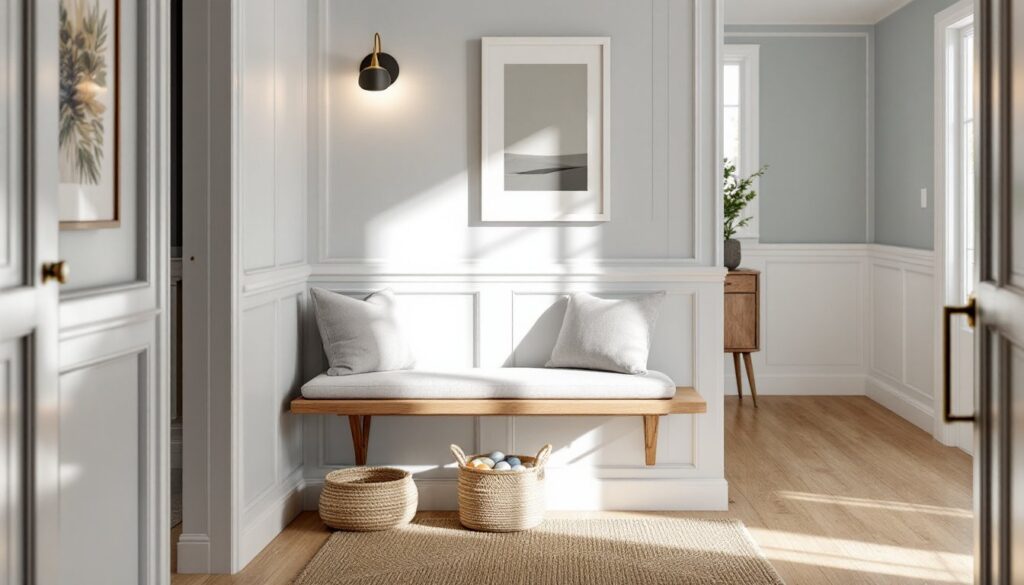
Wall-mounted benches are the space-saving champion for tiny entries. By affixing a bench directly to studs, you eliminate the footprint of legs and frames entirely. The bench cantilevers from the wall, leaving the floor underneath open for shoes or a small mat.
A standard wall-mounted bench spans 36 to 48 inches wide, 15 inches deep, and sits 16 to 18 inches above the floor, ideal for a standard sitting height. Installation is straightforward if you hit studs with heavy-duty bracketing. Most code doesn’t require permits for non-structural benches, but verify with your local building department first.
Material choices vary. A simple plywood or MDF top with metal or wood brackets looks modern. Solid wood benches cost more but age gracefully. Upholstered tops (using 1.5-inch firm foam and vinyl or linen fabric) add comfort and trap fewer dust particles than bare wood.
Budget $150 to $400 for a quality wall-mounted bench, depending on material and size. DIY builders can source brackets from specialty hardware suppliers and cut their own benches from 3/4-inch solid poplar or plywood, saving 30 to 40 percent. Beginner builders often turn to Ana White’s free furniture plans, which include detailed wall-mount bench designs with material lists and step-by-step illustrations.
Storage Benches That Double as Seating
Storage benches are the workhorse of small entries. They seat visitors while concealing clutter, scarves, umbrellas, shoes, and seasonal décor all tuck underneath. Closed storage also reduces visual noise in cramped spaces.
A typical storage bench measures 42 to 48 inches wide, 18 inches deep, and 18 inches tall, with a hinged or lift-top lid. Interior depth is usually 14 to 16 inches, enough for standard-width shoe boxes. Weight capacity matters: quality benches handle 300 to 400 pounds: cheap ones sag quickly under real-world use.
Wood storage benches are durable. Solid pine or poplar frames with plywood panels last decades if assembly is done right. MDF benches are cheaper ($100 to $200) but less resilient to humidity and weight. Upholstered versions add a soft landing surface and blend with softer décor styles.
If buying retail feels pricey, building one is manageable. A basic pine-frame storage bench with a lift-top requires basic carpentry: 2×4 lumber for the frame, 3/4-inch plywood for sides and bottom, and a piano hinge for the lid. You’ll also need wood glue, 1.25-inch pocket-hole screws, and paint or stain. Expect 8 to 12 hours of work and $120 to $180 in materials. The Handyman’s Daughter offers beginner-friendly guides for storage bench builds, including detailed assembly photos and troubleshooting tips.
Built-In Bench Ideas for Tight Corners
Built-in benches make small entries feel intentional and custom, even in rental-hostile layouts. A corner bench uses otherwise dead space and feels like part of the architecture rather than an afterthought.
Built-in benches typically sit 18 inches tall with a 16 to 18-inch depth. They run the length of available wall space, often 5 to 7 feet in residential entries. Framing is attached directly to studs and the floor using 2×4 lumber for the base and back support, with a plywood deck on top. This method distributes weight evenly and supports heavier users than freestanding options.
A basic built-in requires moderate carpentry. Start by locating studs and marking your bench layout. Frame the structure with pressure-treated 2×4s for the base and 2×6s or 2×8s for the back rail, securing everything with 2.5-inch deck screws and construction adhesive. Top the frame with 3/4-inch plywood, then finish with hardwood trim and paint or stain. Adding cushions takes another 4 to 6 hours if you upholster them yourself.
This is not a beginner’s first project. Structural benches benefit from a second set of hands and basic understanding of framing. Mistakes here affect seating comfort and durability. Many homeowners hire a handyperson for framing and finish the cushions themselves, splitting labor and cost.
Budget-Friendly DIY Entryway Bench Projects
If your budget is tight, DIY doesn’t mean compromising. Ingenious projects can transform cheap materials into functional benches in a weekend.
Storage trunk bench. An old wooden trunk or steamer chest ($20 to $40 at thrift stores) becomes seating with legs attached. Sand the exterior, add felt pads or wooden feet, top with a cushion, and you’ve got a charming storage bench in 2 hours. Trunks have natural patina: painting them modern colors refreshes the look without requiring refinishing skills.
Cinder block and wood bench. Stack concrete blocks ($2 to $4 each) and top with reclaimed 2×12 boards ($15 to $30 per board, depending on source). Use 4 to 6 blocks stacked 2-high for an 18-inch-tall bench. No fasteners needed: gravity holds it together. It’s industrial and surprisingly stable. Paint the blocks matte black and sand the wood top for a modern look.
Repurposed side table bench. Woodworkers have transformed side tables into padded benches, adding foam and fabric to create compact seating. Search estate sales and Craigslist for vintage tables with sturdy frames. Reupholstering takes patience but no special tools, just a staple gun, upholstery fabric ($8 to $15 per yard), and 1.5-inch high-density foam cut to size at a fabric shop ($10 to $20).
Painted brick or concrete bench. If your entry already has a low wall, wide ledge, or concrete step, paint it and add a cushion. A $30 outdoor cushion (UV-resistant) makes it inviting. This requires zero building but transforms raw materials into intentional design.
Styling Your Entryway Bench for Maximum Impact
A bench is only half the equation. Styling it makes the entry feel complete and inviting.
Cushioning matters. A thin pad looks cheap: invest in 2 to 3 inches of firm foam covered in quality fabric. Linen, canvas, and performance fabrics hide dirt better than velvet in high-traffic spots. Neutral tones (gray, navy, natural linen) outlast trendy colors. Add a throw pillow for visual interest and softness, it costs $15 to $30 and swaps seasonally.
Lighting. A small wall sconce or pendant above the bench improves both function and mood. Overhead entry lights often feel clinical: side lighting creates warmth. Mount a sconce 60 to 66 inches above the floor, centered over the bench.
Decor above and beside. A mirror hung 18 to 24 inches above the bench serves function (checking appearance) and makes the space feel larger. A small shelf to one side holds baskets for gloves and scarves. Lean a framed print against the wall for casual elegance without commitment.
Flooring and mats. A runner rug (2×4 or 3×5 feet) anchors the bench and defines the entry zone. Choose washable, durable materials like sisal or jute blends. Woven rope baskets underneath absorb visual clutter and store everyday items.
Seasonal swaps. Switch cushion covers quarterly, light in spring, cozy plaids in winter. Swap throw pillows and plants. This keeps the entry fresh without major effort.
Conclusion
Small entryway benches don’t require a sprawling footprint or a designer budget. Wall-mounted benches maximize vertical space, storage benches hide chaos, and built-in options feel custom-made for your layout. DIY projects stretch tight budgets, and thoughtful styling turns a functional seat into a welcoming focal point. Start by measuring your entry, choosing a style that fits your lifestyle, and committing to one option. Your home will thank you for it.