Table of Contents
ToggleA small cottage kitchen doesn’t have to feel cramped or outdated. With smart design choices and strategic storage solutions, even the tiniest kitchens can become functional, charming, and genuinely enjoyable to cook in. Whether you’re working with a vintage cottage layout or a modern compact space, there are proven ways to make every inch count. This guide walks through seven practical design solutions, from vertical storage to multi-functional appliances, that help you maximize your cottage kitchen without a full gut renovation. You’ll find honest advice on what works, what doesn’t, and when to call in help.
Key Takeaways
- Smart small cottage kitchen ideas include open shelving, vertical storage, and multi-functional furniture that maximize every inch without requiring a full renovation.
- Light colors (cream, soft white, pale gray) and layered lighting—including under-cabinet LED strips and pendant fixtures—make small kitchens feel larger and more inviting.
- Choose multi-functional appliances and compact furniture like rolling carts and drop-leaf tables to reduce clutter and keep counters clear for actual cooking.
- Optimize your layout by fixing workflow issues between sink, stove, and fridge, and replace dead-zone corner cabinets with lazy Susan or pull-out systems.
- Invest in practical upgrades like durable countertops (quartz or laminate), quality hardware, and proper task lighting rather than trendy decor that won’t withstand daily use.
- Always measure twice and hire professionals for structural, plumbing, or electrical work to avoid costly mistakes in tight cottage kitchen spaces.
Embrace Open Shelving and Vertical Storage
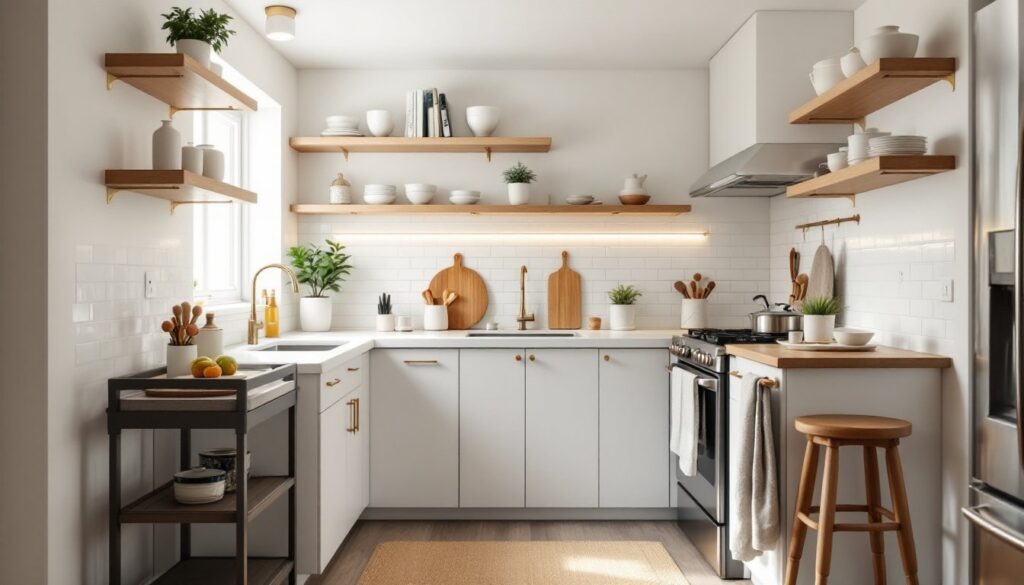
Open shelving is a workhorse in small cottage kitchens. It uses wall space you’d otherwise waste and makes the room feel less boxed-in than a wall of closed cabinets. But, open shelving only works if you keep it tidy and intentional.
Start by measuring your wall space carefully (floor to soffit, corner to corner). Standard shelf depth is 10–12 inches for dishes and glasses: a 10-inch-deep shelf is often enough and projects less into the room. Install floating shelves or brackets rated for at least 50 pounds per linear foot, kitchens are heavy with cast iron, plates, and glassware. Use a stud finder to anchor into wall studs when possible: toggle bolts work for drywall in between studs, but studs are stronger.
What goes on the shelves matters. Group items by color and size: stack your white plates together, line up drinking glasses, and display a few decorative pieces like vintage cottage pitchers or Mason jars. Avoid cramming every inch: white space makes shelves look intentional and keeps the kitchen feeling open. The trend of overstuffed “cottagecore” shelves is Instagram-pretty but impractical for cooking.
Pair open shelving with vertical wall storage above appliances. Hanging rod systems, pegboards, or narrow wall-mounted cabinets work well. Keep frequently used items at eye level and heavier, less-used gear lower. For deeper cottage kitchens, consider a tall narrow cabinet in one corner, it adds storage without taking up counter footprint.
Choose Light Colors and Smart Lighting
Light colors, cream, soft white, pale gray, and warm pastels, are essential in small cottage kitchens. Pale cabinets, walls, and backsplashes reflect light and visually expand the space. If your cottage kitchen has original wood trim or dark beams, embrace them as accent elements, not the dominant color. Paint walls and large surfaces pale to let those details shine.
For cabinetry, consider cabinet refacing if your existing boxes are sound but finishes are dated. Refacing means replacing doors and drawer fronts while keeping the existing frame, much cheaper and faster than full cabinet replacement. A fresh coat of paint (trim-grade paint, not wall paint) on cabinet boxes, plus new hardware, can transform the entire kitchen for under $2,000 depending on size.
Lighting is equally critical and often overlooked. Small kitchens need layered lighting: ambient (overall room light), task (over sink and counters), and accent (open shelves or artwork). A single ceiling fixture leaves shadows where you’re working. Install under-cabinet LED strips over your main prep surface and sink, they’re affordable, run cool, and don’t eat much power. They also highlight open shelves beautifully at night.
Add a pendant or two over an island or counter seating if space allows. Keep fixtures small and open (no bulky shades) so they don’t block sightlines. Color temperature matters: 2700K (warm white) feels cozy in cottage kitchens, while 3000K is slightly cooler and more modern. A mix of both can work if you’re blending styles.
Invest in Multi-Functional Furniture and Appliances
In a tiny kitchen, every piece must earn its place. A rolling cart with storage underneath and a butcher-block or stainless-steel top serves as extra counter space, prep surface, or serving station. It’s moveable too, tuck it in a corner when not in use. A narrow drop-leaf table can be folded down to almost nothing against a wall, then expanded for dining or extra workspace.
For appliances, skip the gadget clutter. Instead of five single-use items, choose compact multi-cookers or combination units. A small induction cooktop takes less visual weight than a traditional range if you have separate wall ovens. Under-counter refrigerators or compact 18-inch-wide washers work in very tight footprints. Instant Pot or similar pressure cookers replace slow cookers, rice cookers, and steamers in one vessel.
Microwave placement is worth thinking through. A microwave drawer (installed horizontally under the counter) saves cabinet space and keeps counters clear, though it costs more upfront. Wall-mounted microwaves work too but eat upper cabinet real estate. Under-counter placement is compact if you have the appliance depth to spare.
When shopping for appliances, check actual dimensions, a “compact” refrigerator might still be 28 inches wide. Measure your space, then measure twice. Stainless steel or matte finishes look contemporary in cottage kitchens: white or cream appliances blend into cabinets and feel more classic.
Optimize Your Layout With Compact Cabinetry
The classic work triangle, sink, stove, and fridge, should flow naturally even in a tiny cottage kitchen. Before you commit to major layout changes, know whether your kitchen is load-bearing. Most kitchens aren’t, but some cottage kitchens have bearing walls. Removing or relocating plumbing (sink) or gas lines (stove) requires a plumber or gas technician: it’s not a DIY project.
Corner cabinets are notorious dead zones. Replace a standard corner cabinet with a corner lazy Susan or swing-out pull-out system. These cost $150–$400 installed but recover wasted space that typical hinged doors can’t reach. Tall, narrow cabinets (9–12 inches wide) fit in gaps where standard 24-inch cabinets don’t and hold surprising amounts of canned goods, oils, or dry storage.
Handle and hinge style matter in tight spaces. Full-extension drawer pulls and soft-close hinges cost more but open fully without hitting adjacent walls or doors. In a cottage kitchen with off-square walls or sloped ceilings, measurements are even more critical, don’t guess. Hire a kitchen designer or cabinet installer to measure: the $100–$200 fee is worth avoiding a $3,000 mistake.
Consider removing the cabinet above the sink if headroom is tight. One open shelf or a short mirror instead of a wall cabinet makes the room feel airier and gives a spot for dish drying without visual bulk. Keep base cabinets for storage where people can’t see them as easily.
Add Personality With Cottage-Style Decor and Finishes
Cottage kitchens thrive on authentic details, not trendy decor. Shaker-style cabinet doors, beadboard backsplash, or original hardwood floors are charming, but don’t force period details into a space that doesn’t have them. Mixing eras (vintage pendant lights with modern open shelves, for example) often feels more lived-in and real than strict themed design.
Hardware choices carry outsized impact in small spaces. Ceramic knobs, aged brass pulls, or simple stainless steel handles all work, but pick one style and stick with it. Mixing hardware styles reads as unintentional rather than eclectic in tight quarters where everything is visible. Budget $3–$8 per knob or pull for quality hardware that won’t corrode or loosen.
Countertop finishes should be durable and low-maintenance. Butcher block feels cottage-authentic but requires regular oiling and isn’t heat-resistant: save it for islands or prep zones away from the stove. Laminate is budget-friendly and comes in dozens of cottage-appropriate colors (cream, pale green, subtle patterns). Quartz is more expensive upfront but maintenance-free and very durable, a solid choice if you’re planning to stay put.
For backsplashes, simple subway tile or small-format ceramic (3×6 inch) feels timeless. Avoid busy patterns that busy up a small space visually. A single accent color (soft blue, sage green, or warm gray) in a limited area (say, behind the range) adds cottage personality without overwhelming. Paint is often overlooked, a fresh coat of high-quality trim paint on existing trim or crown molding is cheap and transforms the space. Apply two coats for cottage kitchens, which get a lot of grease and moisture.
Create an Efficient Workflow in a Tight Space
The way you move through your kitchen, prep to cook to clean, dictates whether it feels functional or frustrating. In small spaces, workflow is even more critical because there’s nowhere to set things down or move sideways.
Start with the sink. It’s your anchor point. Your prep surface should be immediately to one side (ideally the left if you’re right-handed), and your stove within a step or two. If your layout forces you to walk across the kitchen to get from sink to range, consider whether moving either is realistic. Moving plumbing is expensive: moving an electric range or cooktop is cheaper but still requires an electrician if you need new circuits.
Counter space is premium in small cottage kitchens. Keep only essential, daily-use items out: salt, pepper, a knife block, cutting board storage, and perhaps one small appliance. Everything else goes into cabinets or drawers. A shallow drawer insert for utensils takes less space than a counter-top utensil holder. Vertical dividers in cabinets keep baking sheets, cutting boards, and trays organized and accessible without piling them on counters.
Garbage and recycling need smart placement. An under-sink pull-out system or a narrow, tall cabinet beside the sink keeps trash out of sight and away from work surfaces. Composting? A small countertop bin (emptied often) or a narrow wall-mounted container keeps odor and bulk down.
Finally, ensure your main work zone gets good task lighting and counter clearance. You’re more likely to cook in your own kitchen if prepping vegetables doesn’t feel like a claustrophobic squeeze. Resources like The Kitchn and small kitchen organization articles offer practical ideas for workflow optimization. A good cottage kitchen layout respects how you actually cook, not how magazines say you should.
Conclusion
Small cottage kitchens can be just as functional and beautiful as larger ones, sometimes more so because every choice is intentional. Focus on vertical storage, light colors, multi-functional pieces, smart layout, and honest details. Skip the cosmetic-only makeovers and invest in practical improvements: good lighting, durable counters, and finishes that actually hold up to cooking. When in doubt, measure twice and hire a pro for structural or plumbing work. Your cottage kitchen might be small, but it doesn’t have to feel cramped.