Table of Contents
ToggleA small bathroom doesn’t have to feel cramped or dated. When you introduce a black vanity into a compact space, you’re making a bold design choice that instantly elevates the entire room. Black vanities bring sophistication, visual depth, and a contemporary edge that works surprisingly well in tight quarters. Whether you’re updating a powder room or completely overhauling your master bath, the right black vanity paired with smart design strategies can transform your space from ordinary to extraordinary. This guide walks you through eight practical approaches to making a black vanity work beautifully in your small bathroom.
Key Takeaways
- Black vanities act as visual anchors in small bathrooms, creating a sense of intentionality and organization that paradoxically makes the space feel larger rather than cramped.
- Layered lighting with sconces flanking the mirror (36-40 inches apart), LED strip lighting, and warm white bulbs (2700K) is essential to brighten a black vanity setup and prevent it from appearing as a dark void.
- Pair your black vanity with crisp whites and neutrals or warm earthy tones like taupe and greige to create contrast and ensure the vanity feels luxe rather than oppressive in small bathroom ideas.
- Maximize vertical storage with floating shelves, recessed medicine cabinets, and under-sink baskets to minimize visual clutter and maintain the sophisticated look of your black vanity.
- Choose light-colored countertops like white Carrara marble or light gray quartz to provide contrast with the dark vanity base and prevent a heavy, undefined appearance.
- Install an oversized round or rectangular mirror (36-48 inches wide) with a brass, brushed nickel, or natural wood frame to bounce light and visually expand your small bathroom space.
Why Black Vanities Work So Well in Small Bathrooms
A lot of people assume dark fixtures will make a small space feel smaller. That’s wrong. Black vanities actually work like visual anchors, they draw the eye to a specific focal point rather than scattering attention around the room. This grounding effect makes the bathroom feel intentional and organized, which paradoxically makes it feel larger.
Black also hides wear and water spots better than lighter finishes, a practical consideration in humid bathrooms. It pairs seamlessly with both modern and traditional styles, so your vanity won’t look dated as design trends shift. The key is balancing black with enough light and contrast elsewhere in the space, which we’ll cover in the strategies below.
Lighting Strategies to Brighten Your Black Vanity Setup
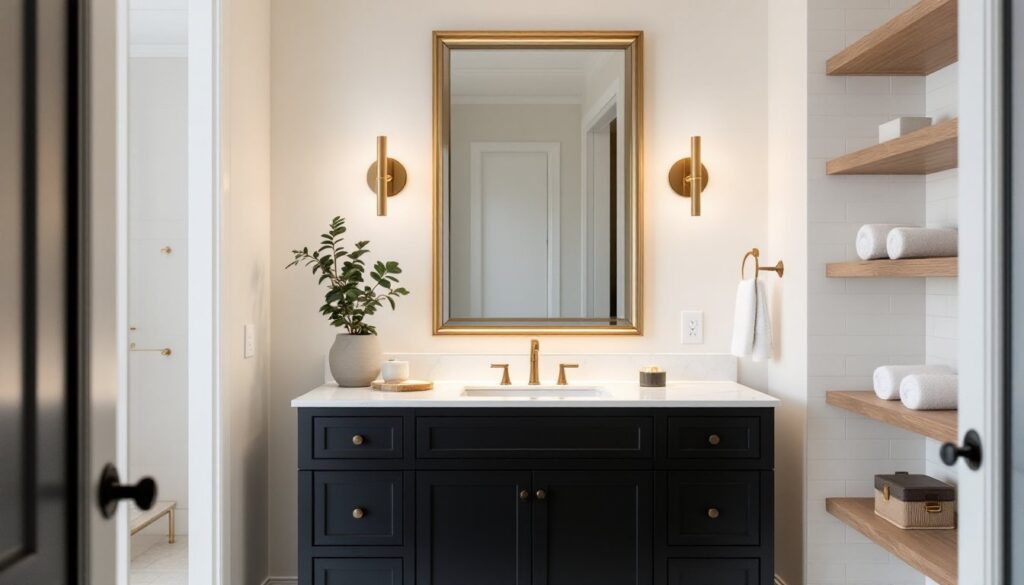
Lighting makes or breaks a small bathroom with dark fixtures. Install sconces flanking the mirror, position them 36 to 40 inches apart, roughly eye level, so they illuminate your face without harsh shadows. Avoid a single overhead light: it creates unflattering shadows and emphasizes the darkness of the vanity.
Consider LED strip lighting under the vanity edge or behind the mirror to add ambient glow. This indirect light bounces off walls and makes the space feel larger while showcasing the vanity’s form. Warm white bulbs (2700K) create an inviting atmosphere better than cool white (5000K), which can feel clinical. Layer your lighting: task lights at the mirror, ambient overhead fixtures, and accent lighting elsewhere. This prevents the black vanity from becoming a dark void and creates visual interest in a compact footprint.
Color Palettes That Complement a Black Vanity
Your wall and accent color choices determine whether the black vanity feels luxe or oppressive. Two proven palettes work best in small spaces.
Crisp Whites and Neutrals for Maximum Contrast
Pairing a black vanity with white or off-white walls creates clean visual separation and makes the vanity a statement piece. Paint walls in Benjamin Moore Cloud White or Sherwin-Williams Alabaster (both soft off-whites, not stark white) to avoid a clinical look. Add warmth with beige or greige subway tile backsplashes and light wood or marble countertops. This approach works in bathrooms with black vanities ranging from modern minimalist to traditional spa-like designs. A white vanity cabinet bottom or light wood legs underneath the black top creates visual lightness, preventing the fixture from dominating the space.
Warm Tones and Earthy Accents
For a cozier feel, combine your black vanity with warm neutrals like taupe, greige, or soft sage. These colors ground the space and work well in bathrooms with natural stone or wood elements. Pair black hardware with brass or brushed gold accents to reinforce warmth. Terracotta, warm gray, or soft olive tiles add texture without visual clutter. This palette suits vanity cabinets for bathrooms that emphasize natural materials and earthy finishes. Incorporate one accent wall in a deeper warm tone, charcoal, soft black-brown, or deep plum, to anchor the black vanity without competing with it.
Storage Solutions and Organization Tips for Compact Bathrooms
A black vanity often comes with limited drawer and cabinet space. Maximize every inch to avoid visual clutter that makes small bathrooms feel chaotic. Choose a vanity with internal drawer dividers or pullout organizers already installed. If yours doesn’t have them, add removable bamboo or plastic inserts for ~$15 to $40.
Wall-mounted storage above and beside the black vanity reclaims vertical space. Install floating shelves (18 to 24 inches deep) using sturdy wall anchors or studs rated for 25 to 40 pounds per shelf. Keep items on shelves minimal and organized: rolled towels, a plant, a decorative box for supplies. A recessed medicine cabinet or mirrored cabinet above the vanity provides hidden storage for medications, skincare, and everyday items. Under-sink storage baskets (woven or metal) organize cleaning supplies and spare rolls while keeping the floor clear. This approach lets you use double vanity ideas for small bathrooms as inspiration even if you only have one vanity, the principle of vertical organization and hidden storage applies equally.
Choosing the Right Countertop and Mirror for Your Black Vanity
Your countertop and mirror choices either enhance or clash with a black vanity. Marble, quartz, or light granite work best, they provide contrast and won’t feel heavy atop the dark base. White Carrara marble or light gray quartz are classics, but consider warm tones like beige or soft cream for earthy designs. Avoid dark countertops unless the vanity has light legs or a light-colored frame, you’ll lose definition and create a visual void.
For mirrors, larger is better in small spaces. A oversized round or rectangular mirror (36 to 48 inches wide) bounces light and visually expands the room. Framed mirrors in brass, brushed nickel, or natural wood add character without the bulk of heavy frames. If you prefer frameless mirrors, keep the glass clean and bright to reflect light effectively. A mirror that extends slightly above shoulder height maximizes function and opens up the wall visually. Look at design inspiration on design-focused sites like Remodelista and interior design platforms like Homify to see how professionals proportion mirrors with black vanities.