Table of Contents
ToggleBlue and green together create some of the most inviting living rooms homeowners can design. These two colors naturally complement each other, they’re neighbors on the color wheel, both connected to nature and calm, yet they’re versatile enough to swing from coastal cottage to modern minimalist. Whether you’re drawn to rich, moody tones or light, airy palettes, blue and green offer a refreshing alternative to the usual neutral walls. This guide walks through shade selection, furniture pairing, and the practical design moves that make these combinations sing in real living spaces.
Key Takeaways
- Blue and green living room decorating combines naturally calming colors that complement each other on the color wheel, creating sophisticated spaces without clashing or feeling sterile.
- Test paint samples in your actual room at different times of day to ensure your chosen blue and green shades work with your lighting and space size before committing.
- Balance both colors through a mix of wall paint, upholstered furniture, artwork, and accessories—avoid leaning too heavily on one color to prevent the room from feeling lopsided.
- Layer textures like boucle, macramé, jute, and woven materials to add depth and prevent solid blue and green walls from appearing flat.
- Use warm-toned light bulbs (2700K–3000K) with dimmers and multiple light sources to soften the colors and enhance the calming effect of your blue and green design.
- Incorporate live plants—such as fiddle leaf figs or monstera—to ground the color choice in nature and create visual conversation within your blue and green living space.
Why Blue and Green Work Together in Living Spaces
Blue and green share a calming psychological effect. Both are associated with water and plants, elements that naturally relax the nervous system. When layered together, they reinforce that sense of tranquility rather than competing for attention.
From a design perspective, they sit close enough on the color wheel that they don’t clash, yet far enough apart to create visual interest. Blue reads as cool and slightly formal: green bridges that gap with warmth and life. Together, they’re sophisticated without feeling sterile.
Another reason they work: both colors read well at different saturations. A muted sage pairs beautifully with a deeper navy, while a bright teal can hold its own next to a pale seafoam. This flexibility means you can adapt the combination to your room’s light, size, and existing furniture without starting from scratch. The key is choosing shades that feel intentional rather than accidental.
Choosing the Right Blue and Green Shades for Your Room
Picking specific shades requires honesty about your room’s light and mood. Pull paint samples. Paint large swatches, at least 2 feet square, on different walls and observe them morning, afternoon, and evening. Interior design websites like MyDomaine offer room-by-room guidance, but nothing beats seeing the actual color in your space.
Navy and Forest Green for Sophisticated Depth
Navy and forest green make a bold, grounded combination. Navy walls paired with forest green accents (or vice versa) feel rich without being dark or oppressive, especially if your living room has decent natural light or you plan to use warm task lighting.
This pairing works best in larger rooms or spaces with high ceilings. If your living room is on the small side, consider navy as an accent wall or trim, with forest green on remaining walls to keep the space from feeling closed in. Furniture works beautifully in light woods, cream, or warm metallics like brass to break up the depth.
Designer tip: navy and forest green together create a “library lounge” vibe. It’s serious, livable, and doesn’t date quickly.
Coastal Light Blue and Sage Green for Calm, Airy Vibes
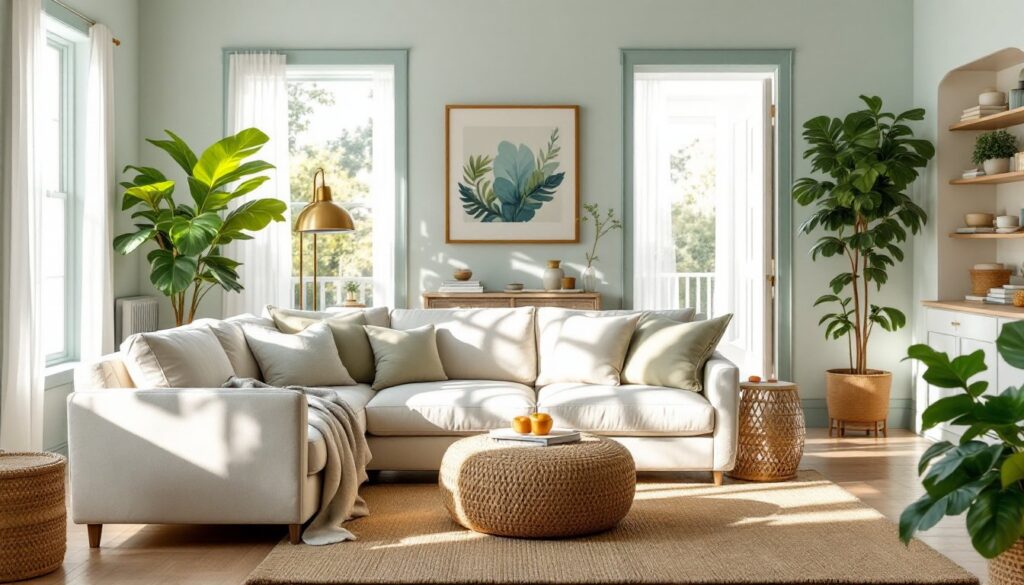
Light blue walls with sage green trim, plants, or upholstery deliver an instantly calming, almost beachy feel. This combination works in rooms with limited natural light because the pale blue bounces ambient light around, and sage green adds visual softness without competing.
This palette is forgiving. Light blue pairs well with white, cream, pale gray, and natural wood. Sage green, a muted, grayish-green, partners with nearly everything. You can load the room with lighter fabrics, wicker, and linen without it feeling too busy.
Pro move: paint the ceiling a very pale blue-green. It extends the color story upward and makes the room feel larger. Pair with natural fiber rugs and unfinished wood shelving for authentic coastal charm.
Furniture and Accessory Combinations That Balance Both Colors
Once your wall colors are set, furniture placement determines whether the room feels balanced or lopsided. A common mistake: going all-in on one color and forgetting the other.
If walls are primarily blue, bring green through upholstered seating, throw pillows, and plants. A sage or muted green sofa against blue walls acts as a visual anchor. Conversely, if green dominates, offset it with blue artwork, curtains, or accent furniture. The goal is rough visual parity, not perfect symmetry.
Neutral furniture, cream, gray, warm taupe, or natural wood, acts as a peacekeeper. A cream linen sectional in a blue and green room doesn’t fight the color story: it lets both shades shine. Accent pieces, rugs, and small furnishings carry the blue and green load.
Accessory strategy: bring in natural materials. Rattan, jute, linen, and reclaimed wood echo the nature-based origins of blue and green. Woven poufs, seagrass ottomans, and wood side tables ground the room and prevent it from feeling flat or overly coordinated. Consider how luxury decor ideas approach balancing color and texture for refined results.
Plants are non-negotiable. Fiddle leaf figs, pothos, monstera, or ZZ plants in the same space as blue and green walls create a conversation. They’re not decoration, they’re proof that the color choice is rooted in nature.
Using Texture and Pattern to Enhance Your Blue and Green Theme
Solid walls of blue and green can feel flat without texture. Layering different finishes, matte, satin, eggshell, across walls, trim, and ceiling adds depth. A matte navy wall paired with a satin finish trim gives visual separation and catches light differently.
Pattern introduces playfulness. A geometric throw in blue and green, striped curtains in alternating shades, or patterned wallpaper on a single accent wall breaks monotony. The trick: stick to one bold pattern per room. If walls are solid, patterned textiles work. If wallpaper is active, keep furnishings simpler.
Texture matters more in quieter color schemes. Introduce it through upholstery weaves, knit throws, macramé wall hangings, and rough-woven rugs. A boucle armchair in cream, a chunky wool throw in cream or white, and a textured jute rug layer visual interest without adding more colors. This restraint keeps the blue and green from feeling cluttered.
Check resources like HGTV for inspiration on mixing patterns and textures, their show styling often balances bold color with thoughtful restraint. For more specific ideas on focal points, mantel styling can anchor the room’s design direction, as seen in mantel decoration magic.
Lighting and Layout Tips for Maximum Visual Impact
Lighting dramatically shifts how blue and green read. Cool-toned bulbs (5000K–6000K) make these colors feel fresh and modern: warm bulbs (2700K–3000K) soften them and add coziness. For a blue and green living room, aim for warm dimmers. They let you adjust mood while keeping colors true.
Layering light is essential. Ceiling fixtures alone flatten color. Add table lamps, floor lamps, and sconces to create depth and shadow, ironically, shadow makes color more vivid. A brass or brushed nickel sconce beside a piece of blue and green artwork draws the eye and reinforces the theme.
Layout impacts color balance too. If your sofa faces a blue wall, the room feels blue-forward. Rotate it so blue and green walls share equal visual weight. Hang artwork (perhaps with both colors) at eye level to draw the gaze around the room rather than settling in one corner.
Windows matter. Sheers or light-filtering curtains let natural light in while softening bright sun, which can wash out muted blues and greens. If your room has minimal windows, artificial light must work harder, invest in quality bulbs and multiple fixtures.
For more tailored advice on arranging your space, den decorating ideas share strategies for optimizing layout in smaller or defined spaces. Even a den-sized area can showcase bold color confidently with smart positioning.