Table of Contents
ToggleA tween girl’s bedroom is more than a place to sleep, it’s her personal sanctuary where assignments gets done, friendships develop over video calls, and identity takes shape. By the time she hits ages 8 to 12, she’s outgrown the pastel-and-princesses phase but isn’t quite ready for a full adult aesthetic. That’s the sweet spot where smart design meets her evolving taste. The right bedroom setup balances function with personality, giving her a space that won’t feel babyish in six months or demand a complete overhaul when trends shift. This guide walks through actionable design moves, color, storage, lighting, and DIY projects, that let her bedroom grow with her while keeping your budget and sanity intact.
Key Takeaways
- Anchor tween girls bedroom ideas with timeless neutral walls and large furniture pieces, then add personality through removable accents like throw pillows, tapestries, and peel-and-stick wallpaper that won’t feel dated in a few years.
- Smart storage solutions like wall-mounted shelves, under-bed rolling drawers, and closet rod extenders maximize space while keeping the room organized and uncluttered.
- Layer your lighting with task lamps for studying, ambient string lights for coziness, and dimmers to shift between focus and relaxation modes.
- Involve your tween in DIY projects like painting an accent wall, assembling furniture, or stenciling patterns to build investment in the design and teach real skills.
- Create a mature gallery wall or personalized pegboard where she can display photos, artwork, and mementos without committing to permanent changes.
Color Palettes That Grow With Her
The biggest trap in a tween’s room is choosing colors that scream a single age or trend. Two years from now, hot pink and mint might feel cartoonish to her. Instead, anchor the room with timeless neutrals, soft grays, warm whites, or subtle beiges, on the walls and large furniture pieces. These act as a backdrop that lets her personality shine without locking in a specific era.
Add personality through accent colors via removable layers: throw pillows, wall tapestries, a painted accent wall (using primer and quality interior latex paint, which covers about 350–400 square feet per gallon), or a peel-and-stick removable wallpaper for lower-commitment pattern play. Navy, sage green, and warm charcoal have real staying power with tweens and work across multiple design directions. If she picks a trendy color now, limit it to one accent wall or small furniture pieces she can swap out without major expense.
Consider how much natural light the room gets. North-facing rooms feel cooler and benefit from warm undertones: south-facing rooms can handle cooler palettes without feeling cold. Paint a test patch and observe it at different times of day before committing the whole room.
Smart Storage Solutions For Small Spaces
The IKEA hack community has long known that EXPEDIT and LACK shelving units are DIY gold for tween rooms. IKEA hacks that blend modular furniture together let you stack, combine, and customize without professional installation. Wall-mounted shelving (securely anchored to studs with lag bolts rated for the combined weight) saves precious floor space and keeps the room from feeling cramped.
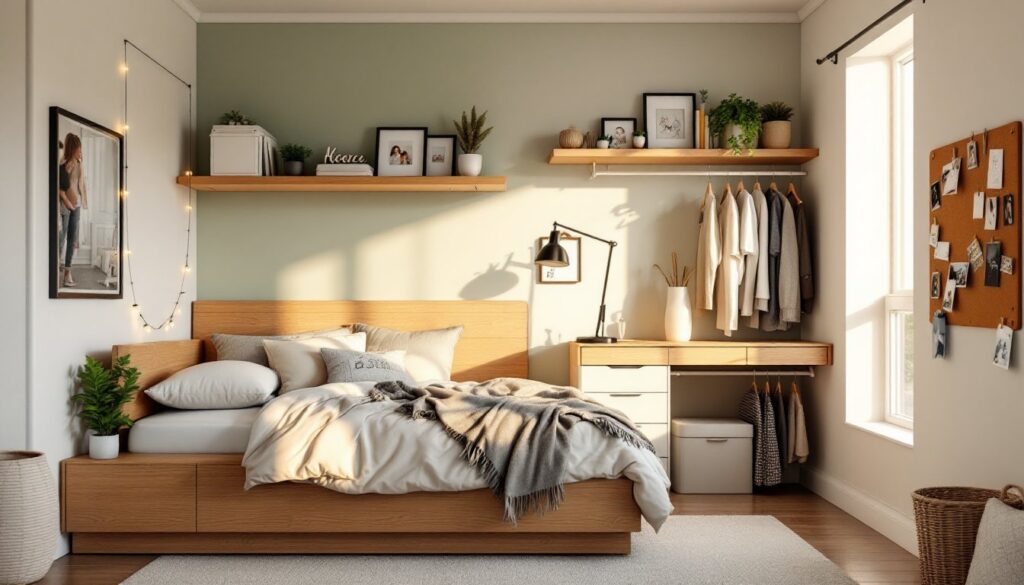
Under-bed storage on rolling drawers or shallow containers lets her stash seasonal clothes, books, and craft supplies out of sight. Label everything with a label maker or waterproof tape: tweens are old enough to maintain systems if they’re clear and easy. Floating shelves above the desk give room for trophies, plants, or curated decor without taking up desk real estate.
Build a closet rod extender if hanging space is tight. A simple dowel or adjustable tension rod installed 12 inches below the existing rod doubles the hanging capacity. Shelf dividers (even DIY cardboard dividers covered in fabric) keep folded clothes organized and prevent the avalanche effect when she grabs something from the middle of a stack.
Functional Furniture Arrangements
Arrange the bed and desk so she has a clear, uncluttered view of the door and, ideally, natural light for assignments. A desk positioned near a window cuts down on eye strain and makes study time feel less confined. Leave at least 30 inches of walking space in front of the closet and between major furniture pieces, code and basic comfort both require it.
Choose a bed frame that doesn’t have a footboard if the room’s small: footboards waste visual space. Platform or loft beds work well if she’s tall enough to navigate safely and you’re confident in the structural anchoring. Multi-functional pieces, a desk with built-in shelving, or a bed with integrated drawers, earn their footprint in tight quarters.
Lighting Design For Study And Relaxation
One overhead light is never enough in a tween’s room. She needs task lighting for assignments, ambient light for relaxing, and ideally, a dimmer to shift between moods. A desk lamp with an adjustable arm (ideally positioned 15 inches from the work surface and 12 inches to the side of her sitting position) reduces glare and prevents eye fatigue during long study sessions.
String lights or LED strip lighting behind shelves or around the bed perimeter add visual interest and create a cozy vibe without harsh shadows. These are low-wattage and safe to install around combustible materials if kept away from fabric. A clip-on lamp on the headboard or nightstand gives her reading light without waking a sibling if she shares a room.
Consider the color temperature of bulbs: cooler whites (4000–5000K) support focus during assignments, while warm whites (2700K) feel more relaxing at night. Smart bulbs let her adjust color temperature throughout the day without rewiring, though they’re more expensive upfront. Avoid placing the main light source directly overhead if possible: it creates unflattering shadows and doesn’t support different activities well.
Wall Decor And Personal Expression
This is where she takes ownership. Rather than you imposing a design, give her a structured framework. A large cork or magnetic pegboard (mounted securely to studs with heavy-duty drywall anchors if studs aren’t available) lets her rotate photos, sketches, or magazine clippings without committing to permanent changes.
Wall decals and peel-and-stick wallpaper give pattern and personality without paint commitment or wall damage. Apply these on a clean, dry surface, and smooth out air bubbles with a plastic squeegee or old credit card. Quality adhesive makes removal easier later.
A dedicated gallery wall with 3–5 frames in a cohesive style (mixed frame finishes can work, but keeping the mat color or wood tone consistent helps) feels more mature than scattered posters. Let her curate the images: family photos, artwork she’s made, favorite quotes, or inspiration for hobbies. Budget makeover bloggers like Young House Love and Addicted 2 Decorating show how simple frame arrangements transform spaces without expensive renovations.
A personalized name sign in wood, metal, or neon-style adhesive tape signals ownership. Hang it at eye level when she’s sitting or lying down, it’s part of her private sanctuary.
DIY Projects Tweens Can Help With
Involving her in the project builds investment and teaches real skills. Here are approachable tasks for ages 8–12 with adult supervision:
Painting an accent wall: If she’s interested, let her roll base coats after you’ve cut in the edges with a brush. Use a paint tray and 3/8-inch nap roller for smooth coverage on drywall. Put down drop cloths and tape off the ceiling and trim with painter’s tape, it removes cleanly without damaging finished paint if applied correctly. She won’t paint perfectly, but that’s the point.
Assembling flat-pack furniture: IKEA and other retailers’ basic units teach hardware assembly. She holds pieces while you drive screws, or she does the driving with a power drill on low torque settings (with your hand guiding). Read the manual together first.
Stenciling a pattern on an accent wall or fabric: Pre-made stencils and acrylic craft paint let her create repeating designs. Tape the stencil down, pounce the paint (don’t brush or roll, pouncing prevents bleeding), and she’s done. Mistake-proof and visually impactful.
Hanging shelves: She can help measure and mark stud locations with a stud finder while you handle the drill and anchoring. It demystifies how walls work.
Arranging and styling shelves: Once installed, let her style them. This teaches spatial composition and gives her authentic control over the final look.
Conclusion
A tween’s bedroom doesn’t need a professional designer or a massive budget, it needs intentionality. Choose timeless bones (neutral walls, quality basics), let her express herself through swappable accents, and include her in the process. The room she helps create will feel genuinely hers, and when her tastes shift in a couple of years, you’ll have a solid foundation to refresh without starting from scratch.