Table of Contents
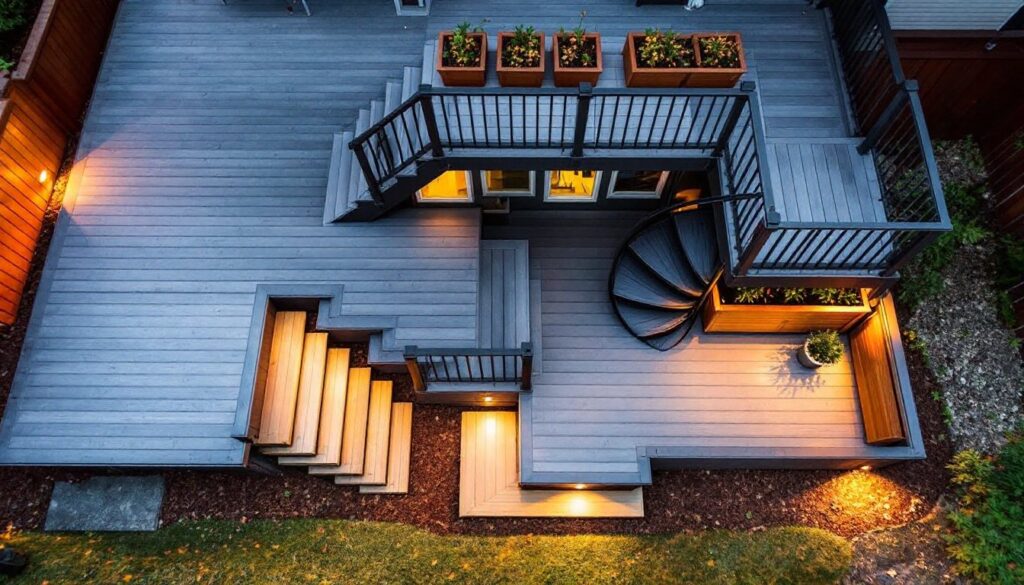
ToggleA split level deck opens up possibilities that a single-plane platform simply can’t match. By stepping up or down the deck surface, you create distinct zones for entertaining, dining, and relaxing, all while making smart use of sloped or uneven yards. Modern split level deck designs balance aesthetics with functionality, giving homeowners a way to maximize outdoor living without a gut renovation. Whether you’re working with a hillside lot or want to add visual interest to a flat backyard, split level decks combine practical engineering with contemporary style that’s fresh for 2026.
Key Takeaways
- Split level deck ideas solve real problems on sloped yards by following natural grade and reducing excavation, while creating distinct zones for entertaining, dining, and relaxing on flat properties.
- Minimalist clean-line aesthetics with composite decking, cable or glass railings, and subtle lighting complement contemporary homes, while layered multi-functional designs maximize usability for entertaining-focused families.
- Composite decking dominates modern split level decks due to durability and minimal maintenance, though pressure-treated lumber offers a budget-friendly alternative that requires regular sealing every 2–3 years.
- Low-voltage LED lighting transforms your split level deck into a night destination with post cap lights, recessed deck boards, and staggered illumination strategies that safely guide transitions between tiers.
- DIY installation saves 30–40% on labor costs, but proper foundation footings below frost line, uniform step heights of 7–8 inches, and lag-bolted rail posts are non-negotiable for safety and code compliance.
- Plan your split level deck project with clear sketches, accurate material calculations, and pre-installed lighting runs before assembly to avoid costly mid-build mistakes and structural issues.
Why Split Level Decks Are Ideal for Modern Homes
Split level decks solve real problems. On sloped properties, they follow the natural grade instead of fighting it, reducing excavation work and material waste. On flat yards, they create visual depth and separate functional zones without needing walls or interior remodeling.
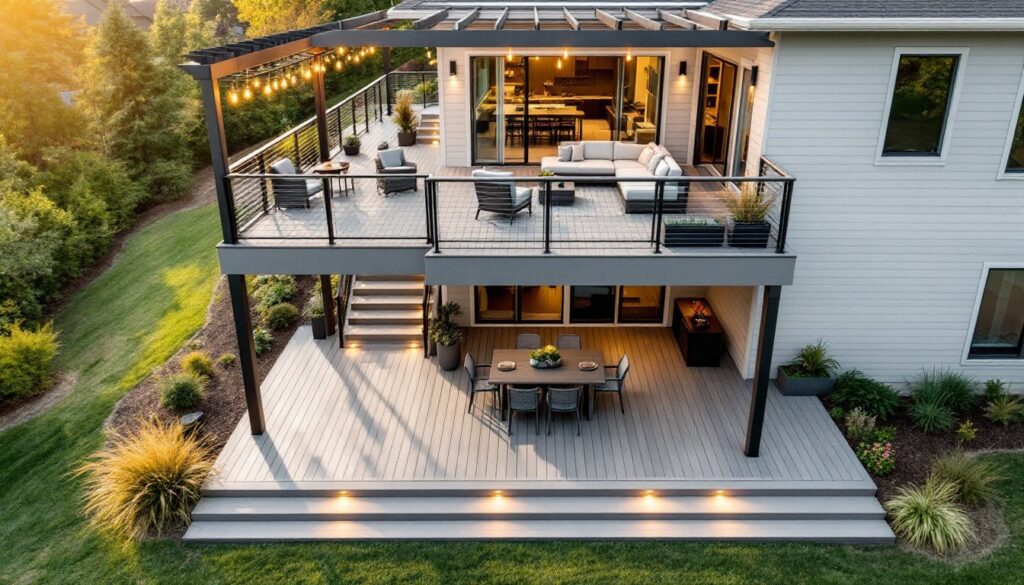
A two-tier deck naturally divides space: the upper level works for lounging and conversation, while the lower tier accommodates dining or a fire pit seating area. This layering makes a modest footprint feel larger and more intentional. Modern homes increasingly embrace this zoning, it’s why open-concept living works indoors, and it’s equally effective outside.
From a structural standpoint, split levels also reduce the span of each individual platform, meaning smaller beams and posts in many cases, which can lower material costs. They’re also easier on the knees and back when you’re stepping between levels rather than climbing a steep deck staircase. Safety-wise, the lower rise per step meets code requirements naturally and feels less jarring for kids or aging parents.
Contemporary Design Styles for Split Level Decks
Minimalist and Clean-Line Aesthetics
Minimalist split level decks use simple geometry and restraint. Straight decking boards run in one direction, typically perpendicular to the house, with no diagonal or chevron patterns that distract the eye. Railings are often cable or glass, keeping sightlines open and the profile lean.
Material choice matters here: composite decking in gray, charcoal, or warm brown tones reads as sophisticated without fussiness. Skirt boards (the vertical fascia that closes off the underside of the deck) in matching or complementary color create a finished, intentional look. Lighting is subtle, recessed post caps or low-voltage strip lights along deck edges rather than ornamental lanterns.
This style works especially well on contemporary homes or mid-century properties. It doesn’t fight the architecture: it complements it. If your home has clean lines and simple siding, a minimalist deck makes the whole package feel cohesive.
Layered and Multi-Functional Spaces
Layered designs embrace the split level format for maximum usability. The upper deck might feature a pergola or shade structure (which can integrate solar strings or fabric for summer cooling), while the middle tier holds a dining table or lounge seating. The lowest level becomes a fire pit zone or conversation nook.
Material variety works here: you might mix deckboards, pavers, or permeable gravel on different levels to signal a change in function. Built-in benches on risers double as seating and storage. Planters, tall containers with shrubs or ornamental grasses, help define each zone without rigid barriers.
This approach suits families or entertaining-focused homeowners. The challenge is preventing it from feeling cluttered: step-by-step DIY project tutorials and detailed deck plans help you map functionality before you build. Every element should earn its place.
Material Choices and Finishes
Composite decking dominates modern deck builds, and for split levels, it’s worth the extra cost. It won’t splinter, requires zero staining, and holds color for 10+ years. Brands vary in shade range, texture (some mimic wood grain, others are smooth), and durability ratings. Check the manufacturer’s specs for UV stability and slip resistance, especially on lower levels where water pools or foot traffic concentrates.
Pressure-treated lumber is the budget option: roughly 50–60% less than composite, but needs staining or sealing every 2–3 years. It works fine if you’re comfortable with maintenance. The heartier grades (rated for ground contact) suit support beams and posts that sit low.
Railing materials set the look. Wood railings feel warm but need annual sealing. Aluminum rails with cable infill are sleek and maintenance-free. Glass panels maximize views on upper tiers, use tempered safety glass and ensure posts are properly anchored: codes typically require 4×4 posts spaced 6 feet on center.
Edging matters too. A complete guide to building a synthetic, multi-level deck will detail how fascia boards and trim pieces protect the deck structure while finishing the visual edge. Composite fascia matches most decking lines and lasts longer than wood.
Finish selection, matte versus glossy, smooth versus textured, affects both safety and aesthetics. Textured surfaces are less slippery when wet but can trap debris and dirt. Matte finishes hide smudges better than glossy. Most manufacturers offer 2–4 finish options per color.
Lighting and Ambiance Solutions
Lighting transforms a split level deck from day-use space to night destination. Low-voltage LED systems are standard now: they’re efficient, safe to install yourself, and come in kits that integrate into deck boards, posts, or fascia.
Post cap lights are the simplest upgrade, screw them onto 4×4 posts and run a low-voltage wire from a transformer near the house. Recessed lights set flush into deck boards create a clean, modern look. Avoid glare by aiming lights downward or outward rather than upward into eyes.
For layered spaces, stagger your lighting strategy: use bright LED strips under the railing on the upper level to illuminate the lower tier, while post caps on the lower tier light the ground. This prevents the spaces from feeling disconnected and improves safety on transitions.
String lights or a pergola-mounted fixture work for ambiance but use higher wattage than deck post caps. If you’re adding a permanent fixture, run dedicated electrical from the house (ideally in conduit buried under the deck) and consult local codes, some jurisdictions require a licensed electrician for outdoor circuit work, especially 240V lines.
Consider color temperature: warm white (2700K) feels inviting and is less likely to attract insects than cool white. Smart bulbs let you dim or change color seasonally without rewiring.
Budget-Friendly DIY Implementation
Start with a clear plan. Sketch your split levels on graph paper: note the rise and run of each step, which direction decking boards run, and where posts sit. This prevents costly mistakes mid-build. Use free deck calculators or woodworking project plans and tool reviews to estimate material quantities.
Budget roughly $25–$45 per square foot for composite decking installed, less for pressure-treated lumber. A 300-square-foot split level averages $7,500–$13,500 for materials and labor: DIY labor saves you 30–40% of the total. But, don’t cut corners on foundation work: concrete footings must be below frost line (varies by region, typically 36–48 inches in northern climates) or frost heave will wreck your deck.
Material prep is non-negotiable. Lumber needs to acclimate to your climate for a few days before installation, moisture content affects how it fits and shrinks. Composite boards are less finicky but still benefit from site time so you spot manufacturer defects under full light.
Rail installation often trips up DIYers. Posts must be lag-bolted or through-bolted to the band board (the framing board around the deck perimeter), not just screwed. Most codes require 4×4 posts and 2×8 or 2×10 horizontals: skimping here is a safety and code violation. If your municipality requires inspections, the inspector will call it out immediately.
Light the lower step rise: each step height should be between 7–8 inches, and all steps must be uniform within 3/8 inch (code requirement). Use a level and measure from deck surface to ground repeatedly as you build stairs.
Consider hiring a pro for structural calculations if your split level has more than two tiers or spans more than 12 feet. An engineer’s stamp costs $200–$400 but prevents a failed inspection or unsafe structure.