Table of Contents
ToggleSmall kitchen counters don’t have to feel cramped or sparse. Whether you’re working with a galley kitchen, a studio apartment, or just limited counter real estate, smart styling and strategic decor can transform the space into something both functional and visually appealing. The key is choosing pieces that earn their place, nothing purely decorative that eats up workspace. This guide walks through nine practical small kitchen counter decor ideas that balance aesthetics with usability, helping you make the most of every inch.
Key Takeaways
- Vertical storage solutions like floating shelves, magnetic knife strips, and tiered stands maximize small kitchen counter space without sacrificing functionality or workspace.
- A unified color palette with 2–3 coordinated colors and consistent materials makes small kitchen counter decor feel intentional and visually spacious.
- Every item on a small kitchen counter should serve dual purpose—choose accessories like ceramic utensil holders, glass jars, and wooden cutting boards that are both practical and aesthetically pleasing.
- Mixing textures and materials (glass, ceramic, wood, and metal) within a minimal palette adds visual richness and prevents a small counter from feeling flat or sparse.
- Strategic lighting, including task lighting above the counter and under-cabinet LED strips, dramatically improves both functionality and the perceived size of a cramped kitchen.
- Grouping plants in odd numbers and displaying only items you use regularly transforms small kitchen counter decor into a curated, clutter-free space.
Vertical Storage Solutions for Counter Clutter
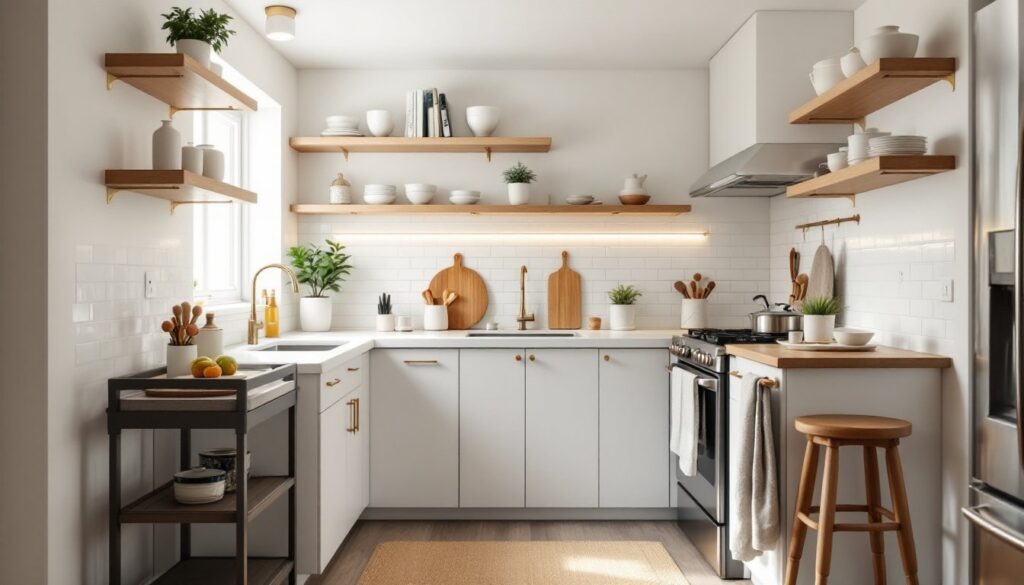
When counter space is scarce, vertical real estate becomes your best friend. Wall-mounted shelves, magnetic strips for knives, and tiered stands can double your storage capacity without eating into precious workspace.
Consider installing floating shelves 12 to 18 inches above your counter. They’re simple to mount (just find your studs behind the drywall), and they immediately draw the eye upward, making the space feel taller and less cluttered. Shelves are perfect for storing everyday items like glasses, small cookbooks, or a few decorative pieces that don’t block your work surface. A magnetic knife strip mounted at eye level keeps blades accessible and organized, safer than a knife block taking up counter room. It also looks intentional and modern.
Tiered stands or risers work beautifully for items you want on display but don’t need every day. Stack a small collection of cookbooks, coffee mugs, or small plants vertically rather than spreading them across the counter. The trick is grouping related items together so it doesn’t feel like visual noise. Tall, narrow items (like a slim utensil holder or a thin vase) create vertical lines that make tight spaces feel more spacious. Avoid anything that crowds the area where you actually prep food, your counter should feel purposeful and uncluttered.
Minimalist Decor That Makes a Statement
Less is more in a small kitchen. A minimalist approach doesn’t mean sterile: it means every item has a reason to be there. Start by removing anything you don’t use regularly, then choose a small number of pieces that feel intentional and reflect your style.
One well-chosen item, a ceramic vase, a small plant, or a decorative cutting board, creates more impact than five mediocre pieces scattered across the counter. Group similar items into small clusters rather than spreading them out. A pair of matching kitchen towels rolled neatly, a couple of glass jars with dry goods, or three small potted herbs in a line feel curated, not cramped.
Color and material matter more in minimalist design because there’s less to hide behind. Stick to two or three dominant colors (like white, natural wood, and stainless steel, or soft gray, brass, and ceramic) and let them repeat across your counter items. This creates visual harmony and makes even a small space feel intentional. Your counter becomes a designed space, not a catchall. When everything is purposeful and coordinated, fewer items actually feel like more style.
Choosing a Unified Color Palette
A unified color palette is the quickest way to make a small kitchen feel intentional. Pick a primary color (neutral is easiest: white, cream, natural wood, or soft gray) and a secondary accent color or two. Then choose counter decor that fits that palette.
If your kitchen has white cabinets and stainless-steel appliances, add warmth with natural wood cutting boards, wooden utensil holders, or a small wooden shelf. If you prefer a warmer aesthetic, incorporate warm metals like brass or copper in small quantities, a brass recipe holder, copper measuring cups, or a small brass lamp. Ceramic and stoneware in neutral tones bridge almost any style.
Consistency across materials reinforces the palette. If you’re using natural wood, incorporate it in a cutting board, a utensil holder, and a small shelf. If you’re embracing stainless steel and glass, choose glass jars, metal containers, and sleek utensil caddies. When your counter items look like they belong together (rather than collected randomly over years), the small space instantly feels more designed and spacious.
Functional Plants and Greenery
Plants bring life to a small kitchen without requiring much space. A windowsill herb garden (basil, parsley, thyme) gives you fresh ingredients steps away from the stove, serves double duty as decor, and doesn’t eat up counter space if positioned on a shelf or ledge above the counter.
Choose compact, low-maintenance plants: small succulents, trailing pothos, or microgreens in small pots. Herbs in individual 3- to 4-inch terracotta pots are ideal because they’re functional and look intentional when grouped together in a line. Avoid large floor plants or sprawling vines that make a tight space feel more confined. A single trailing plant in a small hanging planter above the counter can add greenery without consuming any surface real estate.
When styling plants, grouping odd numbers (one, three, or five plants) feels more natural than even groupings. Vary the pot heights and colors slightly to add visual interest without clutter. Terracotta, ceramic, or concrete pots in neutral tones keep the aesthetic clean. Water regularly and deadhead spent leaves so your plants always look fresh, a struggling plant on the counter reads as clutter, not decoration. Plants also naturally improve air quality, so they’re earning their space on multiple levels.
Stylish Kitchen Accessories That Serve a Purpose
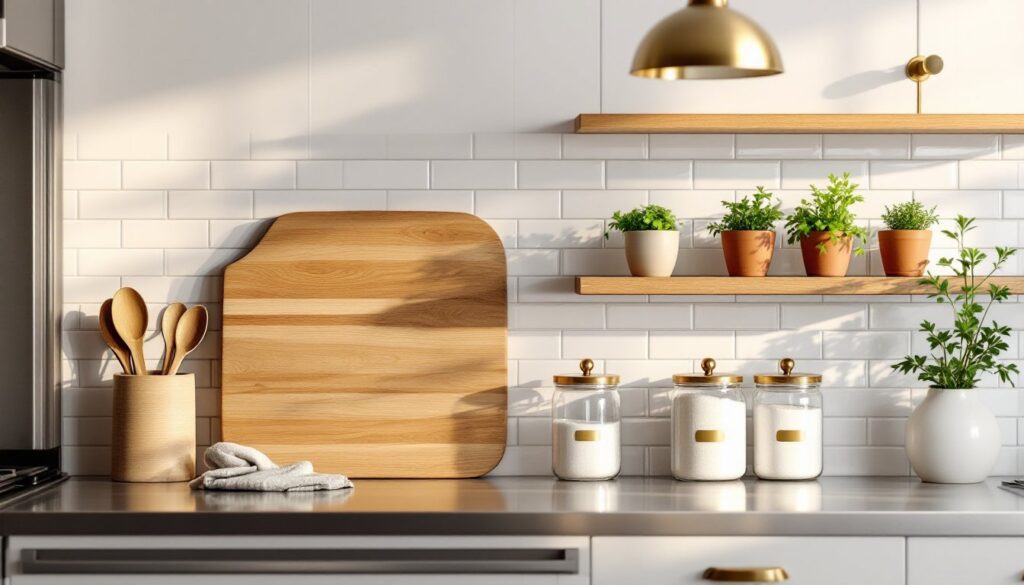
Every item on a small kitchen counter should pull double duty. This means choosing storage and kitchen tools that are both attractive and useful. A beautiful ceramic utensil holder keeps frequently used tools (wooden spoon, spatula, tongs) within reach and organized. Choose one in a neutral color or a material that matches your palette, natural ceramic, stoneware, or glazed pieces in white, cream, or soft gray work with almost any kitchen style.
Small glass jars are workhorses in tight kitchens. Use them to store dry goods (flour, sugar, rice), batch-brew coffee, or hold fresh flowers. Glass canisters with tight-fitting lids keep dry goods fresh while looking cleaner than boxes or bags. Label them with chalk markers or small tags so they’re both functional and intentional. Arrange jars in a neat row or cluster rather than scattering them.
A compact wooden cutting board is both practical and decorative when leaned against the backsplash or propped on a stand. It’s always ready for quick prep work and adds warmth and texture to the counter. Consider a board in a lighter wood tone (maple, ash) or a darker tone (walnut) that complements your kitchen’s materials. Avoid plastic: wood looks intentional and wears beautifully over time.
Small kitchen scales, timers, and measuring tools can be stylish if you choose ones in metals or ceramics that match your palette. Rather than tossing them in a drawer, display a pretty timer or scale if it’s something you use often. A small brass recipe holder or cookbook stand keeps one favorite cookbook accessible without taking up shelf space.
Mixing Textures and Materials
Texture prevents a small space from feeling flat or boring, even when the color palette is minimal. Mix smooth (glass, ceramic) with rough (wood, linen), matte with subtle sheen, and warm with cool tones.
Pair a smooth ceramic vase with a rough-hewn wooden cutting board. Set glass jars next to wooden utensil holders. Drape a linen kitchen towel over the edge of a shelf for softness against hard surfaces. Add a woven placemat under your coffee setup for texture. Small brass or copper accents catch light and add visual interest without overwhelming a tight space.
The key is restraint: you’re not mixing wildly different styles, just varying materials within your chosen palette. A white ceramic mug, a natural wood spoon, and a glass jar in the same visual area create interest without chaos. Layering textures makes even a minimal, understated counter feel rich and intentional.
Lighting Solutions That Transform Your Counter Space
Lighting is criminally underused in small kitchen decor. The right light doesn’t just improve functionality: it changes how the entire space feels. Task lighting over the counter improves visibility for prep work, while softer accent lighting adds atmosphere and makes the space feel larger.
A small pendant light or clip-on lamp mounted above the counter provides focused task light without taking up counter space. Choose one in a finish that matches your accessories: brass, matte black, or natural wood. Make sure the light is positioned so it illuminates your work surface without casting shadows. Avoid overly ornate fixtures in a tiny kitchen: sleek and simple reads better in tight spaces.
Under-cabinet lighting (LED strip lights are affordable and easy to install) washes light across your counter and makes the space feel open and intentional. Modern kitchen design sites like Remodelista frequently highlight how good lighting is as important as paint color in transforming spaces. Install warm-white LED strips (around 3000K color temperature) to keep the kitchen feeling inviting rather than clinical. The light source is hidden, so the effect is clean and uncluttered.
A small table lamp with a shade in a neutral color or woven material adds warmth and visual softness. It breaks up the harder edges of appliances and cabinets. Keep it small and positioned on one end of the counter or on a shelf nearby so it’s decorative without eating workspace.
Lighting also highlights the pieces you choose to display. A small plant or ceramic piece caught in a gentle light immediately looks more intentional and styled. Even modest decor looks polished under thoughtful lighting, so this is one of the highest-impact investments you can make in a small kitchen’s appearance.